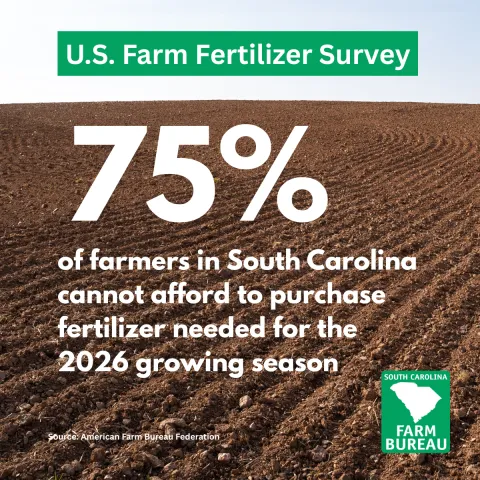
A recent nationwide survey conducted by American Farm Bureau Federation revealed that over 75% of farmers in South Carolina cannot afford to purchase fertilizer for the 2026 growing season. The spike in prices comes as a result of supply shortages in response to the on-going conflict in the Middle East.
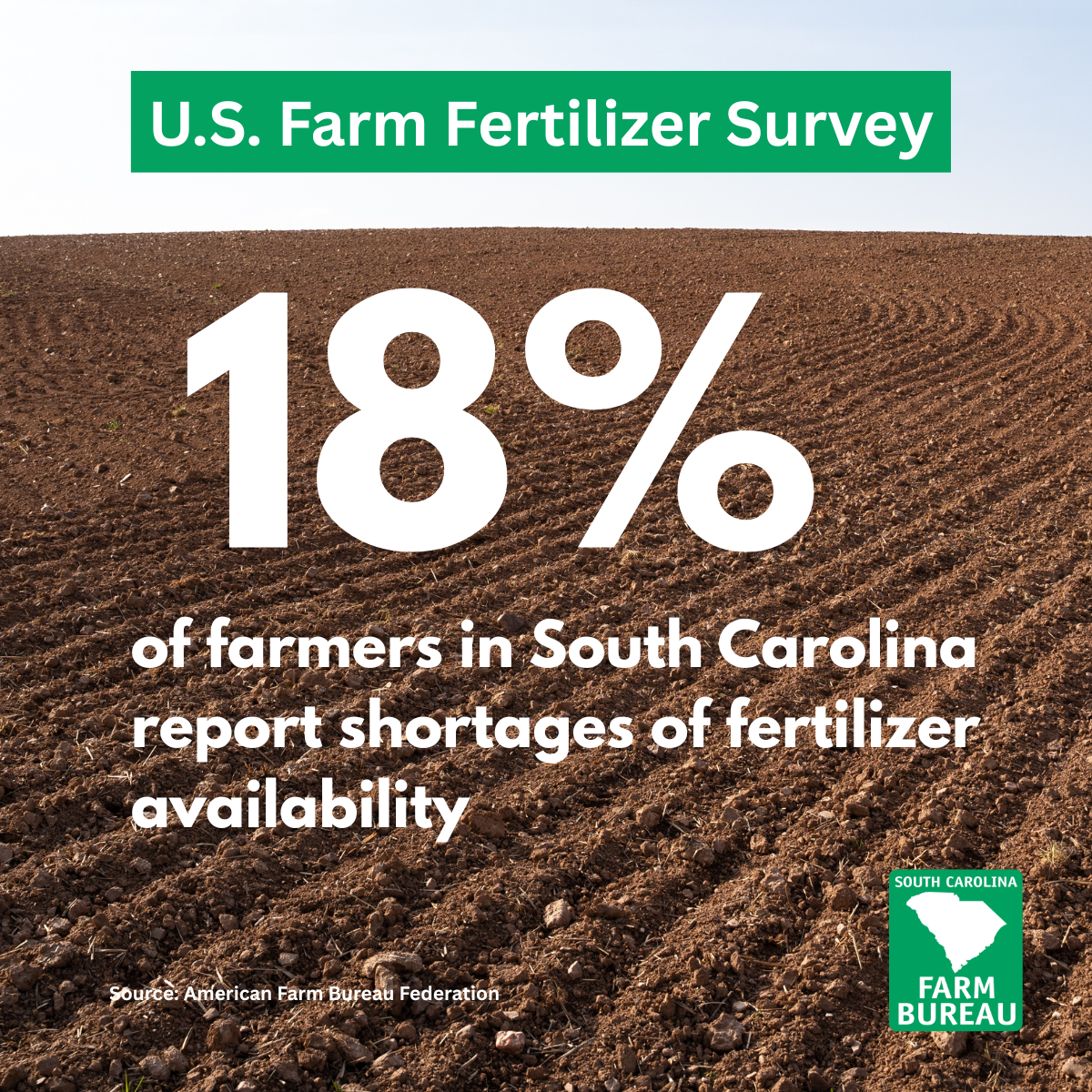
The closure of the Strait of Hormuz is keeping critical fertilizer supplies and crude oil from reaching global markets, putting a squeeze on supplies around the world. Eighteen percent of South Carolina farmers report shortages of fertilizer.
“Our farmers are in a desperate situation that is out of their control,” said SCFB President Harry Ott. “We were already dealing with low commodity prices and now we have soaring fertilizer and fuel costs in addition to drought conditions across the state. If help doesn’t come soon, the agricultural landscape will look very different in 2027.”
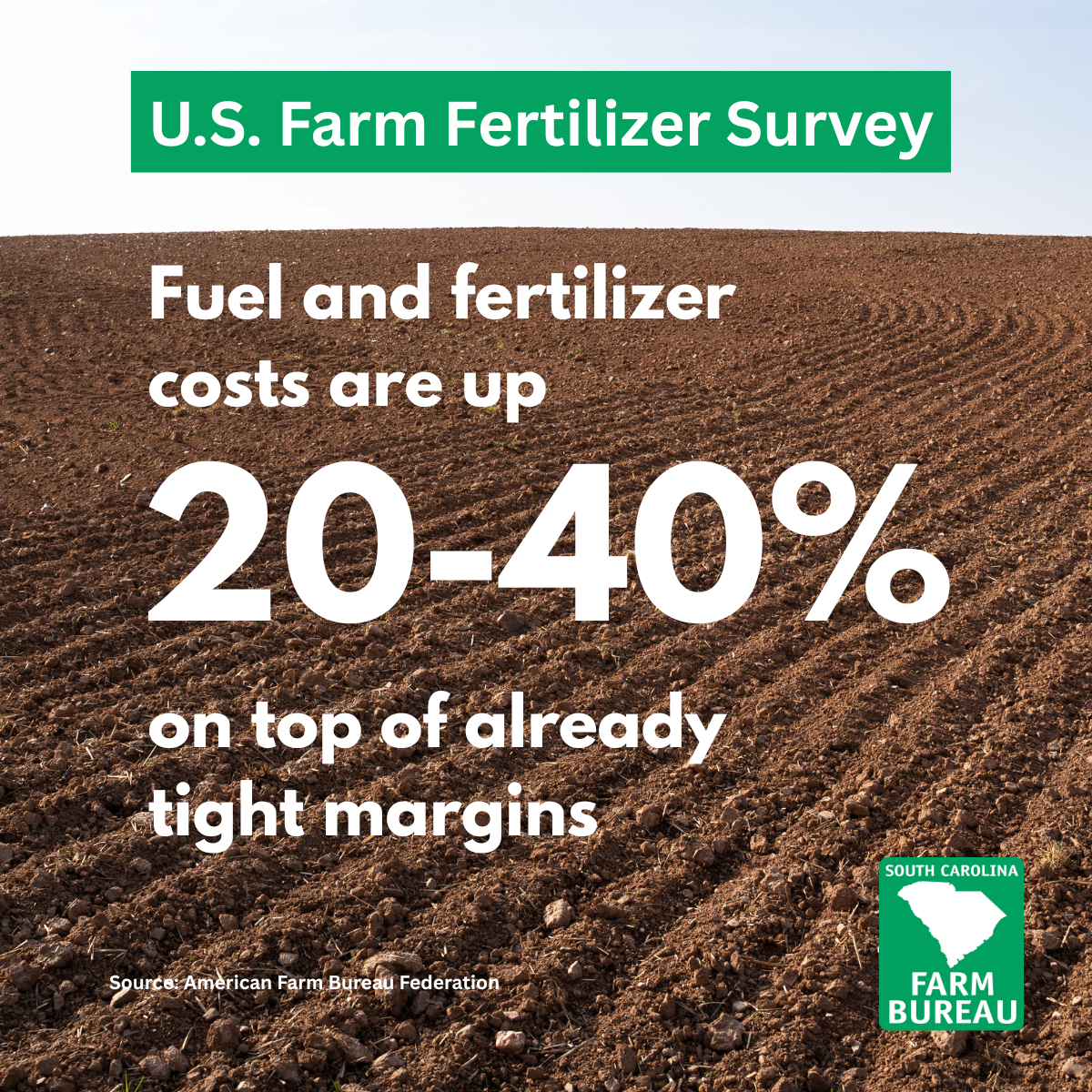
AFBF’s Market Intel reports, “Spring planting decisions depend heavily on access to fertilizer and diesel fuel, both of which have been impacted by geopolitical risks that have disrupted global markets. Since the escalation of tensions in the Middle East, nitrogen fertilizer prices have risen more than 30%, while combined fuel and fertilizer costs have increased roughly 20% to 40%. Urea prices have increased by 47% since the end of February, marking the largest month-to-month percentage increase in the price of urea. These increases are occurring when many producers were already facing tight margins for many consecutive years.”
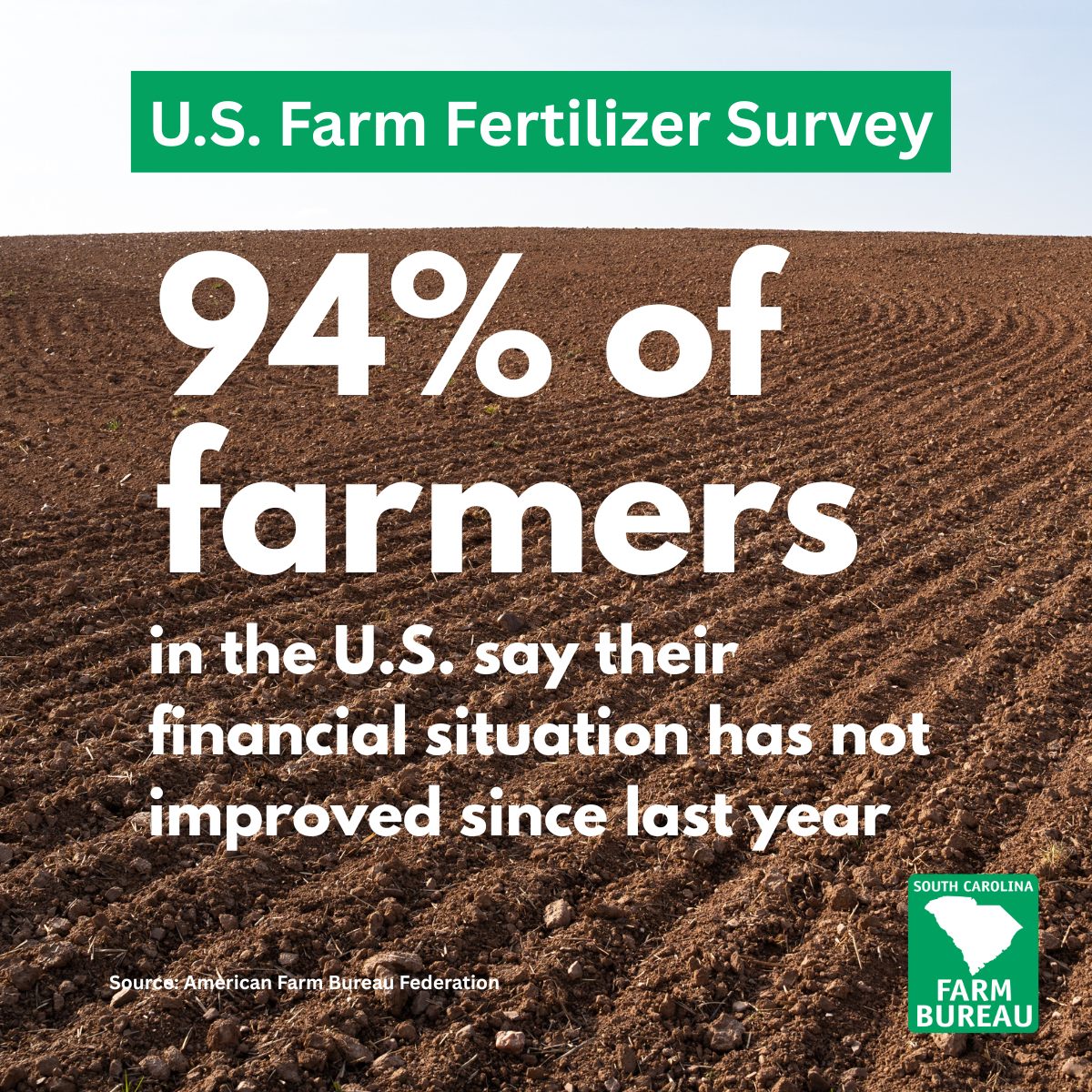
The survey also reported that over 94% of respondents say their financial situation has worsened or stayed the same as last year with just over 4% reporting an improvement.
Get more nationwide survey results and view AFBF’s full Market Intel here.